Have you ever sipped hot chamomile tea to calm a nervous stomach? Or maybe you've tried acupuncture to fix a nagging lower back pain that wouldn't go away. If so, you've taken part in a tradition that spans thousands of years. We often call these methods "alternative" or "complementary" medicine today. But if you look back far enough, they aren't alternative at all. They're the original health systems of human history. Long before modern labs synthesized chemical compounds, human communities relied on plants, physical adjustments, and mind-body practices to stay healthy.
Public perception has shifted in a big way over the last few years. What used to face skepticism in Western clinics is now sparking genuine curiosity. Doctors, researchers, and everyday people are asking a simple question: what can ancient wisdom teach us about staying healthy today? To find the answer, you have to take a quick journey around the globe.
The Ancient Roots: Historical Origins and Evolution
If you want to trace where complete healing began, you have to look across several continents at once. Ancient civilizations didn't treat health as just a broken mechanical part. They saw the human body as an entire ecosystem connected to nature.
Here's how some of the earliest systems took shape.
• Mesopotamia and Egypt: Cuneiform clay tablets dating back to 2100 BCE show that early Middle Eastern healers created complex botanical remedies. They combined plant extracts with physical bandages and spiritual chants to treat injuries and sickness.
• Ayurveda in India: Developed over 3,000 years ago, Ayurveda operates on a balanced system of physical energies called doshas. Healers used targeted diets, specific lifestyle routines, and native herbs like ashwagandha and turmeric to keep bodily energies aligned.
• Traditional Chinese Medicine: Built on concepts of Qi (key life force) and the balance of Yin and Yang, Traditional Chinese Medicine codified techniques like acupuncture, moxibustion, and herbal formulas into organized texts.
• Greco-Arabic and Unani Systems: Hippocrates popularized the idea that illness stems from imbalances in bodily humors rather than divine punishment. His work merged with Middle Eastern medical philosophy during the Islamic Golden Age, creating Unani healing traditions.
As centuries passed, trade networks like the Silk Road helped these ideas spread far beyond their home borders. Merchant caravans didn't just carry silk and spices. They carried dried roots, seeds, and medical scrolls. Over time, informal folk knowledge turned into structured, highly organized medical traditions.
Global Perspectives: Indigenous and Complete Practices
Although written texts preserved Asian and Mediterranean medicine, Indigenous communities across Africa and the Americas built deep healing knowledge through oral traditions and direct observation of local ecosystems.
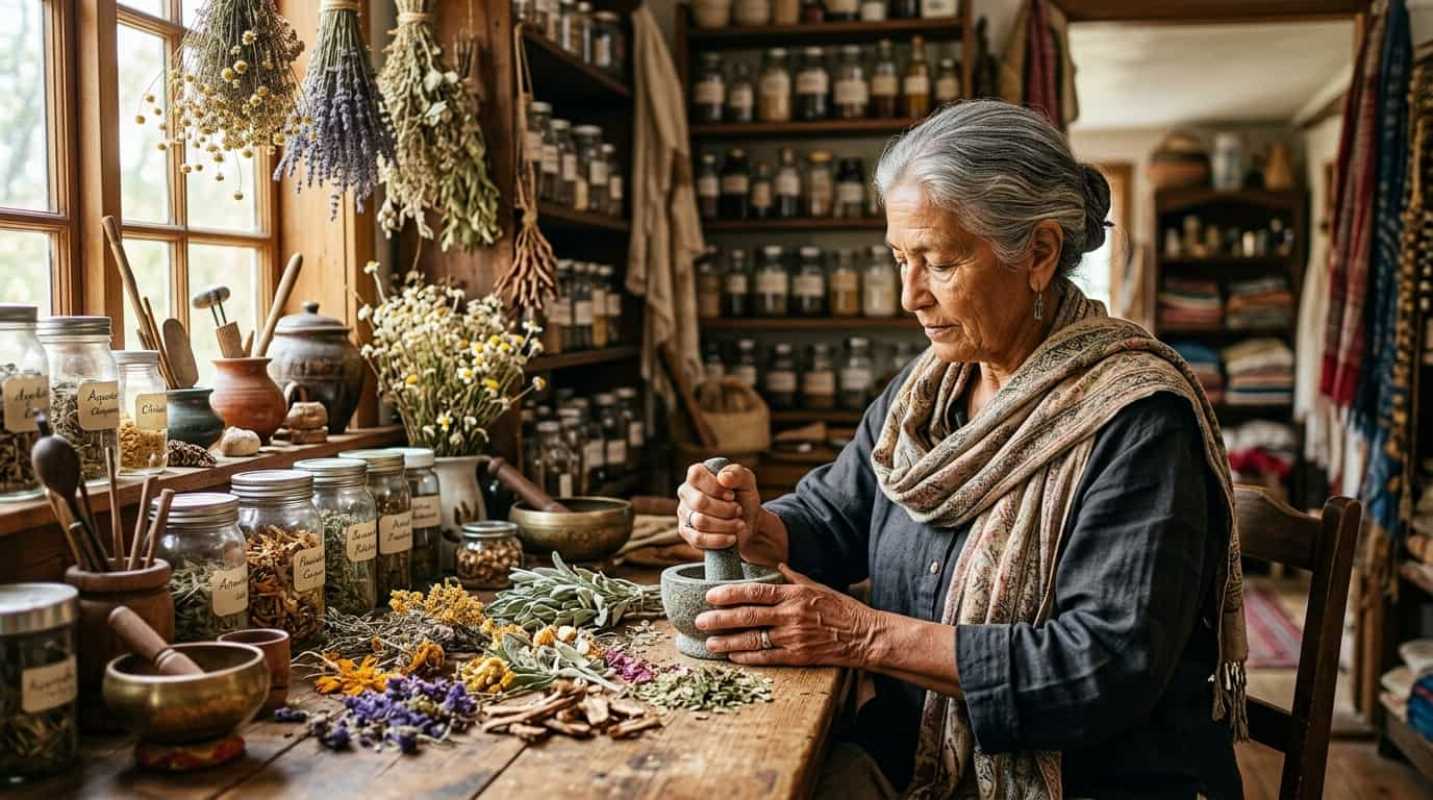
In North and South America, traditional healers and curanderos recognized that you can't heal a physical body while ignoring the spirit or community. They relied on native plants like white sage, willow bark (the natural origin of modern aspirin), and potent entheogens for both emotional and physical recovery. Healing ceremonies brought family and neighbors together, treating health as a shared responsibility.
Traditional African medicine followed a similar complete path. Healers acted as plant specialists and spiritual guides, diagnosing illnesses by examining a patient's social relationships, mental state, and natural surroundings.
Geography shaped every local practice. Communities living near tropical rainforests developed deep knowledge of vine bark and tropical leaves. Meanwhile, desert dwellers relied on hearty roots and cacti. Despite vastly different climates, these distinct cultures shared one core principle: true health requires balance between mind, body, and environment.
The Modern Day Resurgence: Why Now
So why are millions of people turning back to ancient practices in 2026? The shift isn't just a lifestyle trend. It's a massive economic and cultural movement.
The global complementary and alternative medicine market reached well over $200 billion in 2025 and is projected to pass $1.4 trillion over the next decade.² People are looking for preventative care rather than just taking a pill after getting sick. In fact, nearly one in three Americans used some form of alternative therapy over the past year.
Global health organizations are stepping up to validate and integrate these practices.
• WHO Approach: In May 2025, the World Health Assembly adopted a ten-year approach to integrate traditional medicine into universal healthcare frameworks.¹
• Standardized Tracking: The World Health Organization updated its ICD-11 classification system to include traditional medicine, making it easier to track clinical results globally.
• Evidence-Based Research: Clinical trials continue to confirm what ancient practitioners knew intuitively. Dr. Susan Wieland, Director of Cochrane Complementary Medicine, noted that trials show clear evidence that yoga and acupuncture effectively relieve chronic lower back pain.³
Dr. Shyama Kuruvilla from the WHO Global Traditional Medicine Centre recently pointed out that for nearly half the world's population lacking access to standard care, traditional medicine is the primary health resource.¹ For others, it's a deliberate personal choice because it offers individual, complete care that aligns with their lifestyle.
Digital connectivity plays a massive role too. Mobile apps for meditation and biofeedback bring ancient mind-body practices straight to your smartphone. At the same time, artificial intelligence is now analyzing ancient herbal formulas to understand how plant compounds interact with our modern diets and gut microbiomes.
If you're interested in exploring how traditional modalities can complement your daily wellness routine, here are resources and tools to get started.
A Collaborative Future for Global Health
The story of alternative medicine isn't about choosing between ancient plant remedies and modern Western science. The most exciting developments happen when both worlds work together.
Imagine a medical system where an oncologist prescribes state-of-the-art chemotherapy alongside clinical acupuncture to manage nausea and awareness meditation to lower anxiety. That isn't a distant dream. Major hospital systems across North America and Europe are building integrated clinics right now.
As we move forward, respecting global healing traditions while applying rigorous modern research offers the best path to overall health. By keeping an open mind about history, you gain access to a thousands-of-years-old toolkit for taking care of your health.
Sources:
1. World Health Organization Traditional Medicine Updates
https://news.un.org/en/story/2025/12/1166563
2. Complementary and Alternative Medicine Market Size Report
https://www.novaoneadvisor.com/report/us-complementary-and-alternative-medicine-market
3. Traditional Medicine Evidence and Healthcare Integration
https://www.theguardian.com/global-development/2025/dec/20/who-traditional-medicine-alternative-remedies-mainstream-healthcare-evidence
*This article on FactBlast is for informational and educational purposes only. Readers are encouraged to consult qualified professionals and verify details with official sources before making decisions. This content does not constitute professional advice.*