Have you ever considered letting someone insert tiny needles into your skin to fix an aching back or quiet a racing mind? If your healthcare experience is mostly rooted in Western medicine, the idea might sound a bit counterintuitive. Yet millions of people swear by it every single week. Acupuncture has been around for more than 2,000 years, originating as a core pillar of traditional Chinese medicine. For decades in the West, mainstream medicine viewed it as an alternative niche practice. But over the last decade, something interesting happened. Major hospital systems, pain clinics, and oncology centers began adding acupuncturists to their patient care teams.
Today, both patients and doctors are looking closely at how needle therapy can fit into evidence-based care. The shift from alternative therapy to integrative medicine is happening fast. So why are so many clinical researchers suddenly paying attention to an ancient practice?
The Traditional Practice Explanation: How It Works
In traditional Chinese medicine, everything centers around the concept of Qi (pronounced "chee"). You can think of Qi as your body's natural energy flowing through a complex network of internal highways called meridians. When traffic moves smoothly along these pathways, your body stays balanced and healthy.
When illness or injury strikes, traditional theory says your energy flow is blocked or out of balance. Placing microscopic needles at specific points along these meridians acts like clearing a traffic jam, restoring the proper balance of energy throughout your system.
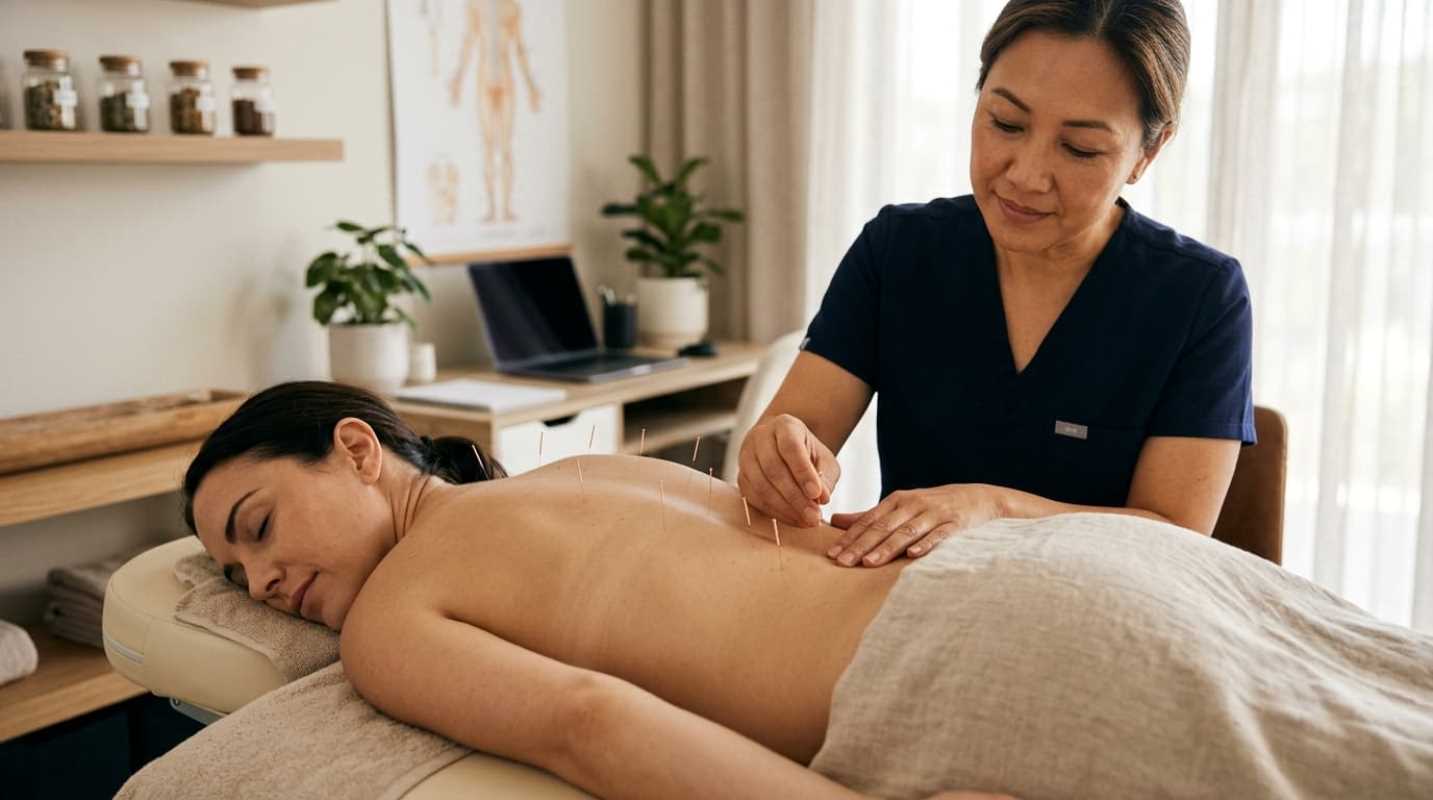
Modern science translates this idea into biology you can see under a microscope. Doctors skip the metaphysical terms and focus on physical stimulation. Inserting thin needles into precise anatomical locations stimulates peripheral nerves. This triggers a cascade of electrical and chemical signals that travel straight up your spinal cord and into your brain.
Common Conditions Treated: Where Acupuncture Shines
Although people try acupuncture for all sorts of health concerns, it really stands out in a few key areas.
• Chronic Low Back Pain: Persistent back pain is the most frequent reason people book an appointment. It offers a way to ease stiffness without relying entirely on pain medications.
• Neck and Joint Pain: Patients dealing with knee osteoarthritis, neck strain, or joint inflammation frequently report smoother movement and less aching after a series of sessions.
• Migraines and Tension Headaches: Regular needle treatments often reduce both the frequency and intensity of severe headaches.
• Stress, Anxiety, and Sleep: Beyond physical pain, many people find that acupuncture calms an overactive nervous system, helping them unwind and sleep better at night.
Clinical Research Findings: What the Data Actually Says
So what does the hard data actually tell us? Is acupuncture just a placebo effect, or is there measurable physiology taking place?
Recent large-scale studies give us a clear look. A 2025 Cochrane review analyzing 31 systematic reviews and nearly 97,000 adults showed that acupuncture is one of the most consistently supported non-drug therapies for subacute and chronic low back pain, easily outperforming standard medical care alone.¹
For joint issues like knee osteoarthritis, a 2024 network meta-analysis involving over 9,900 participants found that needle therapy reduced pain intensity significantly more than sham acupuncture or common anti-inflammatory medications like NSAIDs.² Higher treatment frequency provided even greater relief.
Mental health research shows promising results too. A 2025 meta-analysis published in the Journal of Clinical Psychology examined 20 clinical trials and concluded that manual acupuncture significantly reduced anxiety compared to fake needle controls or waitlists.³
How does this happen physiologically? Brain imaging and blood samples reveal that needle stimulation sparks a release of natural endorphins, your body's built-in painkillers. It also regulates the hypothalamic-pituitary-adrenal axis, which lowers stress hormones like cortisol and restores balance to your nervous system.
Understanding the Evidence: Finding a Balance
Despite these positive findings, researchers point out important nuances in the data.
When scientists compare real acupuncture to sham acupuncture (where non-penetrating needles or off-target points are used), real acupuncture wins, but the gap is sometimes moderate. This tells us that patient expectations, therapeutic rapport, and physical touch play a real role in how much relief you feel.
Methodology matters too. Clinical trials struggle to double-blind acupuncturists because practitioners know whether they are inserting a real needle. That is why researchers often rate the overall certainty of evidence as moderate rather than absolute.
Acupuncture works best as a complementary tool rather than a total replacement for modern medical care. It is not going to set a broken bone or cure an infection. But when used alongside standard care, it provides real benefit with very low risk. Side effects are minor, usually limited to slight soreness or mild bruising at the insertion site. Just make sure you choose a licensed acupuncturist who uses sterile, single-use needles.
Is Acupuncture Right for You?
If you are living with persistent pain or chronic stress, an evidence-informed approach makes sense. Major medical organizations, including the American College of Physicians, now recommend non-drug options like acupuncture before reaching for prescription painkillers or opioids.
Before scheduling your first session, talk with your primary care provider. They can help you determine how needle therapy fits into your overall health plan and point you toward certified practitioners in your area.
Combining ancient Eastern practices with modern Western diagnostics gives you more options for your health. When traditional wisdom and modern science align, patients win.
Sources:
1. Morning Side Acupuncture - 2025 Cochrane Review
https://www.morningsideacupuncturenyc.com/blog/2025-acupuncture-low-back-pain-cochrane-review
2. PubMed - Network Meta-Analysis on Knee Osteoarthritis
https://pubmed.ncbi.nlm.nih.gov/39520569/
3. PubMed Central - Meta-Analysis on Acupuncture for Anxiety
https://pmc.ncbi.nlm.nih.gov/articles/PMC12664193/
*This article on FactBlast is for informational and educational purposes only. Readers are encouraged to consult qualified professionals and verify details with official sources before making decisions. This content does not constitute professional advice.*