How many times have you stood in your child's bedroom holding a book, only to be met with a heavy sigh? If you are tired of the nightly bedtime battles over reading, you are definitely not alone. It is incredibly frustrating when you want your child to love stories, but they treat reading like an absolute punishment.
Stop the Struggle and Understand Why Kids Resist Reading
The first step to fixing this is understanding why the resistance happens in the first place. When kids fight back against books, it is rarely because they cannot read. More often, it is because they feel too much pressure, or they simply find the books they are given boring.
When we turn reading into a strict chore, we accidentally destroy a child's natural motivation. Think of it like exercise. If you are forced to run on a treadmill for thirty minutes every day while someone watches you with a timer, you will quickly grow to hate running. Kids feel the exact same way when we hover over them with reading logs.
This struggle is happening in homes everywhere. Recent data shows we are in a bit of a reading slump. A major report analyzing over a million students showed a 4.4% drop in the number of books children read, marking a rare decline in reading volume.¹
At the same time, a recent National Literacy Trust survey found that only about one in three children enjoy reading in their free time, and only 18.7% read daily.²
Why does this happen? The drop-off is especially steep as kids grow up. Although 70% of younger kids say they enjoy reading, that number plummets to just 46% by the time they hit their teenage years.³ When reading feels like a stressful school assignment, kids run the other way.
Lower the Stakes by Redefining What Counts as Reading
So how do we turn this around? We have to change our definition of what actually counts as reading. Many parents fall into the trap of thinking a child is only reading if they are working through a thick, traditional chapter book.
It is time to throw that old rulebook away. All reading is good reading, and non-traditional formats are some of the best tools we have to help reluctant readers build confidence.
Take graphic novels, like. For years, well-meaning parents dismissed them as silly comic books that did not count as real reading. But cognitive science has completely debunked this myth. Graphic novels are actually the fastest-growing format in children's publishing, with interest jumping from 22% to 37% in recent years.³
Even better, kids who read graphic novels are twice as likely to enjoy reading overall compared to those who do not.² Why? Because of how their brains process the pages. A study from the University of Oregon found that graphic novels often contain more complex vocabulary than traditional books of the same level.⁴
The illustrations provide immediate context clues. This means children can decode and learn advanced words they would normally skip in plain text. Scientists call this dual coding. The brain processes visual and verbal information together, which helps kids understand and remember the story much better.
Then we have audiobooks, which are having a massive moment. For the first time, more children actually enjoy listening to audiobooks and podcasts than reading print, at 42.3% compared to 34.6%.²
If you think listening is a shortcut, think again. Listening to audiobooks actually sparks an interest in physical books for over 37% of young listeners.² It is also a fantastic way to bridge the gender gap. Although girls traditionally read more print than boys, boys actually enjoy audiobooks at slightly higher rates than girls.²
For neurodivergent kids, including those with dyslexia or ADHD, audiobooks are a game-changer. They remove the exhausting physical struggle of decoding letters, allowing kids to focus entirely on the plot and vocabulary. Plus, listening to a professional narrator teaches kids how words should sound, which improves their own reading fluency.
The Power of Choice and Environment
To help a child love reading, you have to give them control. Think about your own reading habits. Would you want to spend your evening reading a book someone else forced you to read? Probably not.
An incredible 89% of kids agree that their favorite books are the ones they picked out themselves.³ If your child wants to read a manual about video games, a cookbook, or a magazine about dirt bikes, let them. Autonomy is the secret to building a lifelong habit.
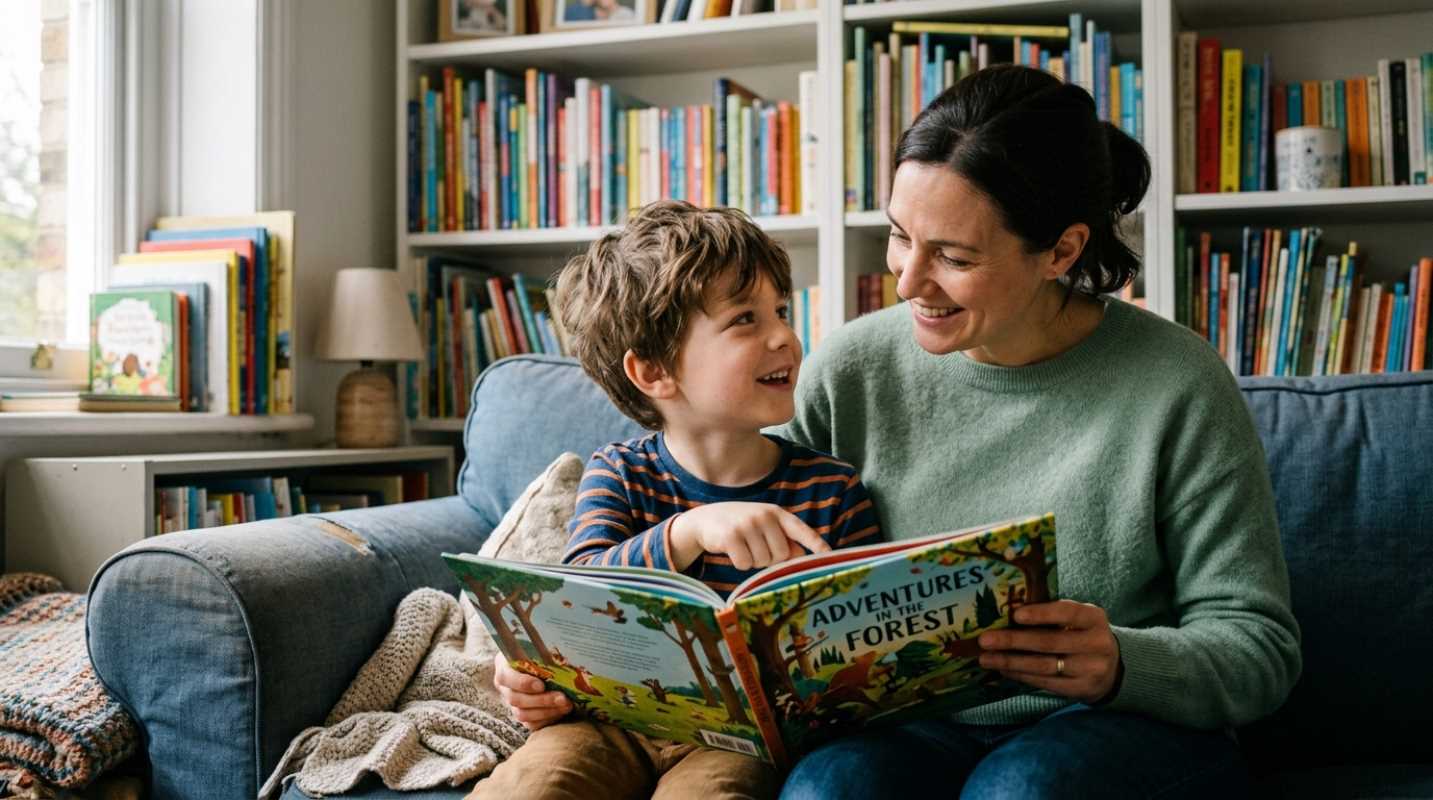
Next, look at your home environment. Is there a spot in your house that makes you want to curl up with a book? You do not need a massive library to make this happen. Just create a low-pressure reading nook with soft pillows, a warm blanket, and good lighting. Keep books visible and within reach, but do not make a big deal out of it.
Most importantly, let them see you read. If you want your child to pick up a book, you need to put down your phone and do the same. Children mimic what we do, not what we tell them to do.
Gamification and Routine-Building Tips
If you want to build a lasting routine, you have to make it feel like a natural part of the day rather than an extra homework assignment. This is where low-stress routines and creative approaches come into play.
Try creating special reading rituals. You can pair reading time with a special treat, like a cup of hot cocoa or a favorite snack that they only get when they have a book in hand. This associates reading with comfort and relaxation.
You can also use these simple approaches to build the habit
• Use Hi-Lo books: These are high-interest, low-readability books.⁵ They offer exciting, age-appropriate stories but use simpler vocabulary so struggling readers do not feel frustrated.
• Try reading-while-listening: Have your child listen to an audiobook while following along in the physical graphic novel. This helps them build reading speed and keeps them from getting stuck.
• Keep sessions short: Do not force a thirty-minute block right away. Start with just five minutes of reading a day and celebrate that small win. You can slowly build up their stamina over time.
• Make it social: Try reading scripts aloud together like a mini-play. It is a great way to practice reading without the pressure of a school assignment.
Patience and the Long Game
Building a reading habit is not a sprint. It is a long, slow walk, and there will be days when your child simply does not want to cooperate. That is completely normal.
If they have a bad day and refuse to read, do not turn it into a fight. Just try again tomorrow. Consistency matters far more than intensity. Reading for five quiet minutes every single day is much better than forcing a screaming match over a thirty-minute reading log on Sunday night.
Trust the process and meet your kids where they are. By letting go of the pressure, redefining what reading looks like, and giving them the power to choose, you will help them discover the joy of stories at their own pace.
Sources:
1. Renaissance What Kids Are Reading 2024
https://uk.renaissance.com/blog/press-release-what-kids-are-reading-2024/
2. National Literacy Trust
https://literacytrust.org.uk/reading-for-pleasure/
3. Scholastic Kids & Family Reading Report
https://www.scholastic.com/content/corp-home/kids-and-family-reading-report/reading-lives.html
4. Scholastic Guide to Graphic Novels
https://www.scholastic.com/parents/books-and-reading/raise-a-reader-blog/3-reasons-graphic-novels-can-be-great-young-readers.html
5. Just Right Reader Reluctant Readers Guide
https://justrightreader.com/blogs/news/supporting-reluctant-readers