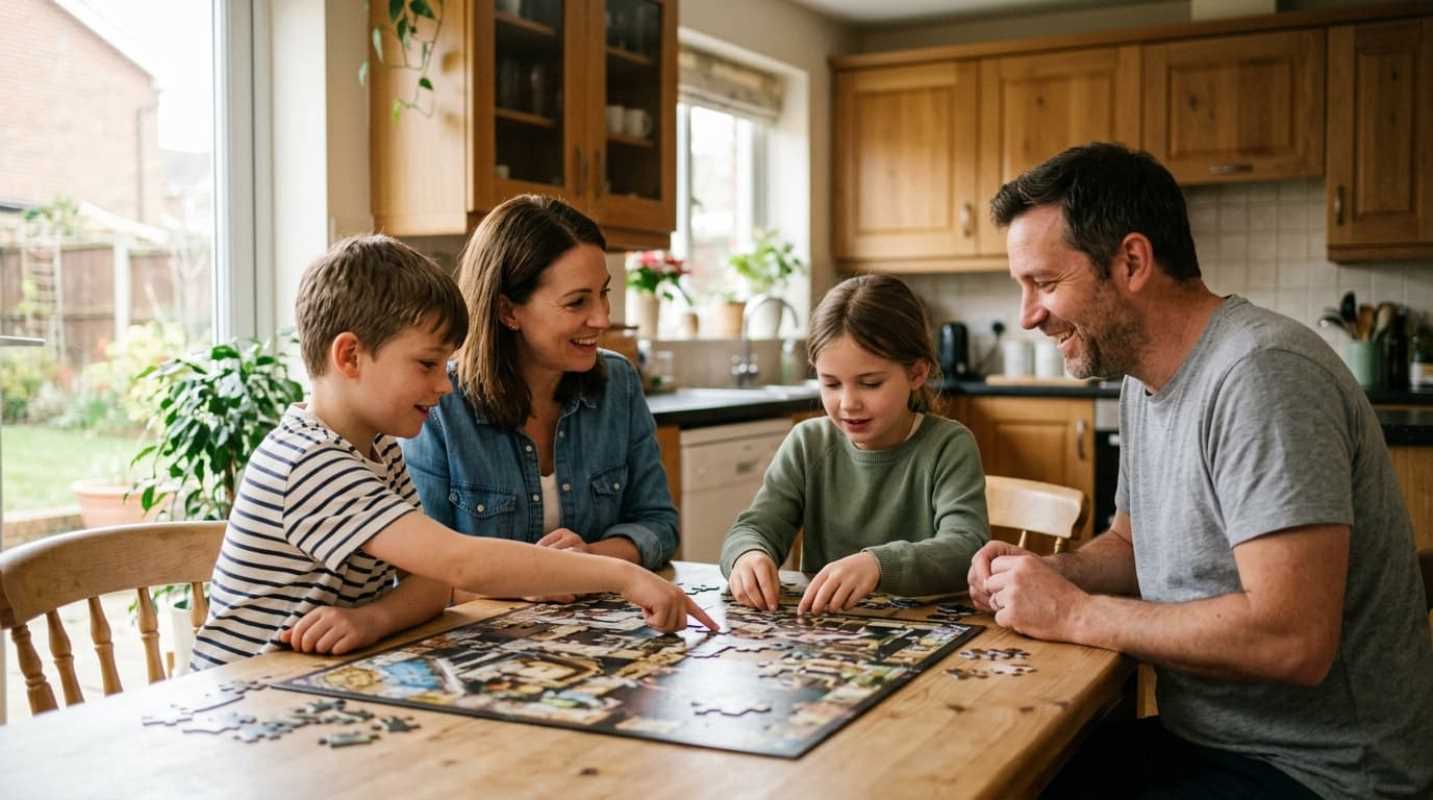
Remember the absolute thrill of mixing random soaps in the bathroom sink when you were a kid? That raw, messy curiosity is where science actually starts. You do not need a million-dollar laboratory or a advanced degree to spark that same sense of wonder in your own children. In fact, your kitchen is already the perfect discovery lab. Science is messy, loud, and incredibly fun when you let go of the need for perfect order.
Turning Your Kitchen into a Discovery Lab
When we think of science, we often picture sterile rooms and white coats. But real science is about asking questions, making mistakes, and getting your hands dirty. By bringing simple experiments into your home, you show your kids that learning is not just something confined to a classroom. It is an active, living part of their daily lives.
The best part is that you do not need to be a genius to lead these activities. You just need to be willing to explore alongside your kids. Let go of the pressure to have all the answers. Sometimes, the most powerful words a parent can say are, "I don't know, let's find out together."
Why Kids STEM Activities Build Future Skills
Why should you care about doing science at home? For starters, the job market is shifting fast. The U.S. Bureau of Labor Statistics projects that employment in STEM occupations will grow by 10.4% between 2023 and 2033, compared to just 3.6% for other jobs. But the real magic of hands-on science is how it changes the way kids think.
When kids get their hands dirty, they learn to solve problems in real-time. A study by Vernier Science Education found that 92.6% of people surveyed said hands-on lab work was the single most important factor that inspired them to pursue STEM careers.¹ Right now, schools are struggling to keep up. Although 82% of Gen Z students say their schools offer STEM classes, only 29% have actually built an electrical circuit, and only 42% have tried coding or robotics.² Doing science at home bridges this massive gap.
Starting early pays off. Research shows that kids who build strong math and science skills by age 5 have better important thinking abilities and enjoy higher academic success throughout life.³ Plus, it is a fantastic way to bring the family together. One study on family-focused science programs showed that active family engagement jumped by 35% when parents and kids worked on projects together.⁴ The number of families working collaboratively on tasks rose from 46% to 62%.
Have you ever felt a bit of anxiety about math or science? Many parents do. But you do not need to be an expert to guide your kids. Programs like the Discover STEM family initiative show that when parents get involved in simple home activities, their confidence in teaching their kids shoots up.⁵ You get to learn right alongside them, which models great learning behavior.
Top Recommendations for Science Kits
If you want to jumpstart your home laboratory, here are some of our favorite pre-made science kits and tools to make your weekends a lot more exciting.
3 Classic Experiments Using Household Staples
You do not need to buy expensive equipment to start experimenting. These three classic activities use simple ingredients you probably already have in your pantry.
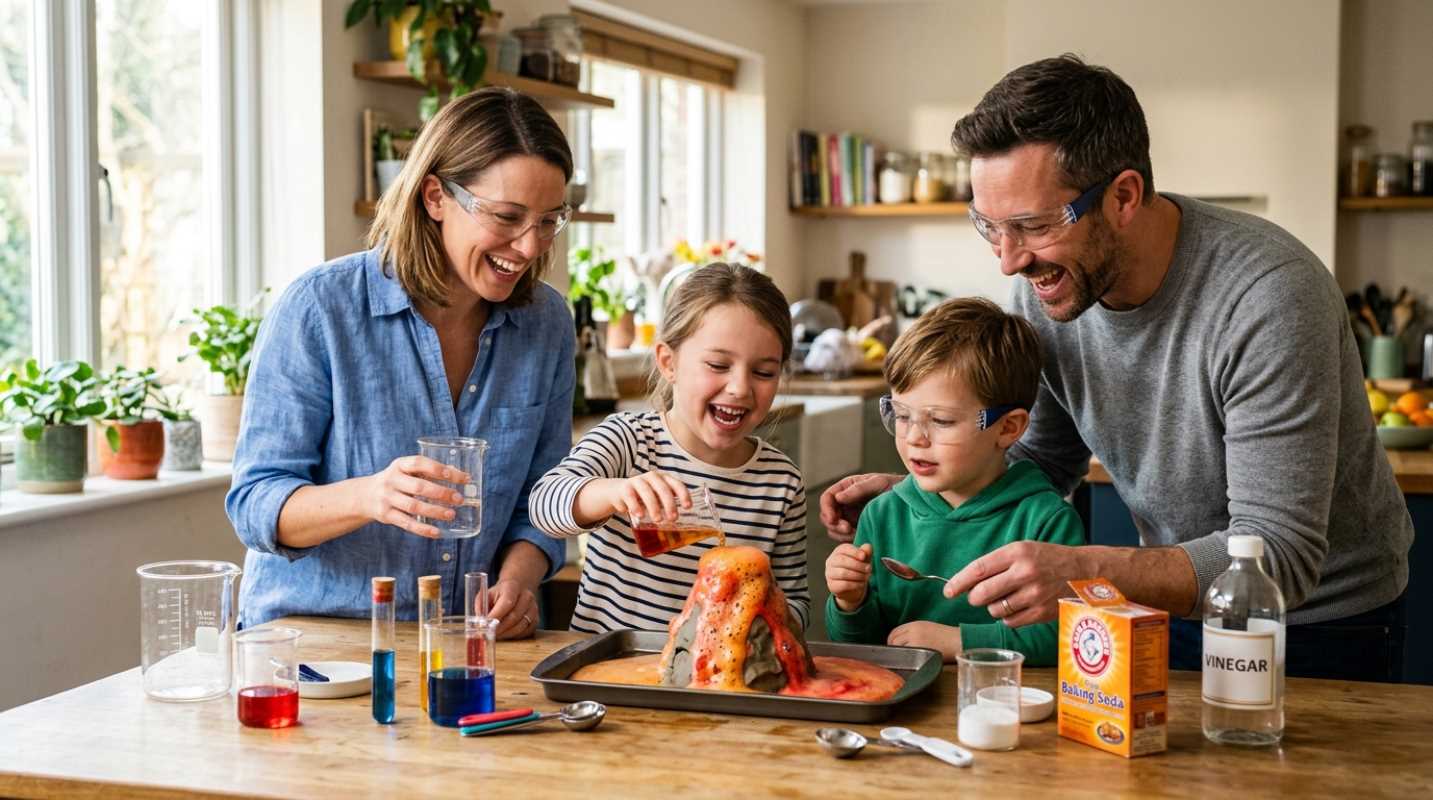
The Soap-Infused Volcano
Forget the standard dry explosion. This twist on the classic vinegar and baking soda volcano uses dish soap to create a slow, oozing lava flow that kids love to touch.
1. Prep the base: Place a tall plastic cup or empty water bottle in the center of a deep baking dish to catch the mess.
2. Mix the lava: Add two tablespoons of baking soda, a generous squirt of liquid dish soap, and a few drops of red food coloring to the cup.
3. Trigger the eruption: Pour in half a cup of white vinegar and watch the thick, bubbly foam spill over the sides.
The science here is simple. Vinegar is an acid and baking soda is a base. When they mix, they react to create carbon dioxide gas. The dish soap traps this gas, turning what would be a quick splash into a thick, creeping foam.
The DIY Lava Lamp
This experiment is a gorgeous lesson in density and liquid properties. It looks like a high-tech gadget, but it takes less than five minutes to build.
1. Fill the jar: Fill a clean glass jar about three-quarters full with vegetable oil, then fill the rest with water.
2. Add color: Drop 10 to 12 drops of food coloring into the jar. Notice how the drops pass through the oil and mix only with the water at the bottom.
3. Start the bubbles: Drop a quarter of an Alka-Seltzer tablet into the jar and watch the colored water bubble up through the oil.
Water and oil do not mix because water molecules are highly attracted to each other, and oil is less dense than water, so it floats on top. The tablet dissolves in the water and releases carbon dioxide gas. This gas hitches a ride on the colored water droplets, carrying them to the top. When the gas escapes into the air, the water drops sink back down.
Growing Sugar Geodes
This experiment takes a little patience, but the results are beautiful. It is a perfect way to show how crystals form over time.
1. Make the solution: Dissolve three cups of white sugar into one cup of boiling water. Keep stirring until the water is completely clear and cannot dissolve any more sugar.
2. Prepare the container: Pour the warm liquid into a clean glass jar or a clean, empty eggshell for a geode effect.
3. Seed the growth: Dip a string or a pipe cleaner into the liquid, roll it in dry sugar, let it dry, and then suspend it in the jar using a pencil.
4. Wait and watch: Leave the jar undisturbed in a quiet spot for a week and watch the crystals slowly grow.
As the hot water cools, it holds less dissolved sugar. The water also slowly evaporates. This leaves the sugar molecules with nowhere to go, so they begin to cling to the string and to each other, forming structured crystals.
Safety First for a Stress-Free Learning Environment
Let's be honest: science can get messy. If you are constantly worrying about your carpets or your walls, nobody is going to have a good time. The key is setting up your space for what we call controlled chaos.
• Designate a splash zone: Use a plastic tablecloth, a large baking sheet, or even move the entire experiment outside to the grass or driveway.
• Keep towels handy: Have a roll of paper towels or a wet rag nearby before you start pouring anything.
• Set clear rules: Teach kids that we never eat or drink our experiments, even if they look like candy or soda.
• Use protective gear: Cheap safety goggles or even swim goggles make kids feel like real scientists while keeping their eyes safe.
By preparing the physical space beforehand, you can focus on the fun rather than stressing over clean-up.
Beyond the Experiment to Encourage Scientific Thinking
The real goal of home science is not just watching a cool reaction. It is about teaching your kids how to think. You can use a simple framework developed by the STEM Next Opportunity Fund called CARE to guide your sessions.
• Connect: Keep things completely pressure-free. Frame the experiment as a fun game rather than a school assignment.
• Act: Let your child lead the physical steps. Let them do the pouring, the mixing, and the measuring to build their motor skills and confidence.
• Reflect: Ask open-ended questions. Avoid the temptation to explain the science immediately. Instead, ask what they think is happening.
• Help: Let them change the variables. If they ask what happens if you use cold water instead of hot water, let them try it and find out.
You can also give your kids a cheap notebook to use as a science journal. Have them draw what they think will happen before the experiment, and then draw what actually happened. If an experiment fails, celebrate it. Ask them why they think it did not work. In the real world, scientists fail constantly, and every failed attempt is just another step closer to a solution.
Making Science a Daily Family Habit
Bringing science into your home does not mean you need to schedule hours of lesson planning every week. It is about finding small moments of curiosity in your everyday routine. Why does water bead up on a car window? Why does bread rise in the oven?
Start small. You do not have to conquer all these experiments in one weekend. Pick just one simple activity, gather the ingredients, and give it a try this Saturday. You might end up with a sticky kitchen counter, but you will also end up with a child who looks at the world with a little more wonder.
Sources:
1. Vernier Science Education Study
https://www.vernier.com/blog/how-hands-on-learning-deepens-stem-engagement/
2. Walton Family Foundation Gen Z STEM Report
https://www.waltonfamilyfoundation.org/about-us/newsroom/majority-of-gen-z-interested-in-stem-but-schools-struggle-to-provide-adequate-support
3. National Institutes of Health Early STEM Study
https://pmc.ncbi.nlm.nih.gov/articles/PMC7036285/
4. National Science Teaching Association Family Science Nights Case Study
https://www.nsta.org/connected-science-learning/connected-science-learning-october-december-2020/re-imagining-role
5. U.S. Department of Education Discover STEM Report
https://files.eric.ed.gov/fulltext/ED656094.pdf