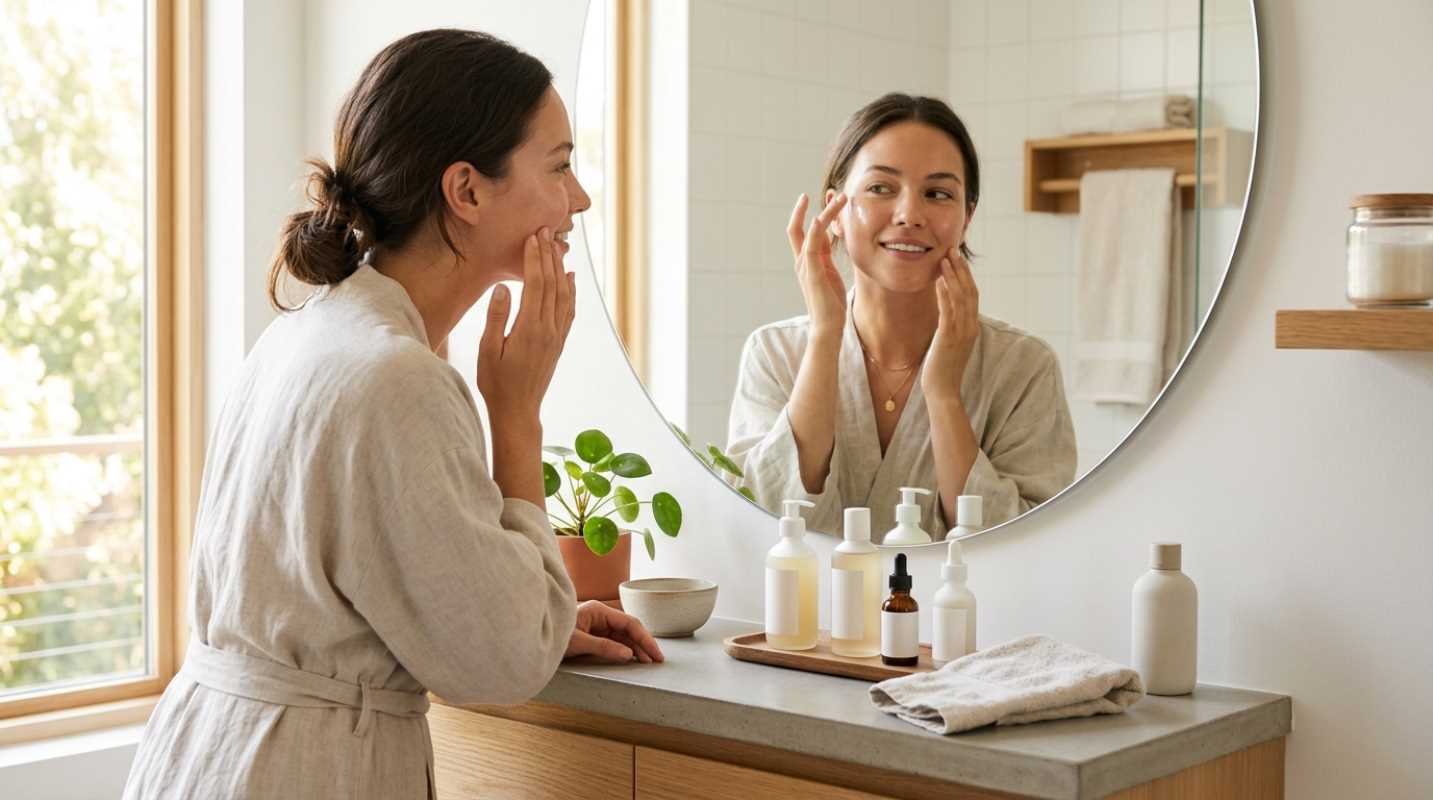
Have you looked at your skincare shelf lately and felt like you need a degree in biochemistry just to wash your face? You're not alone. The modern beauty market is flooded with complex ingredients, overnight miracle claims, and biohacking trends that promise to reprogram your cells. It's easy to get lost in the noise. Two ingredients currently dominate the conversation: ceramides and peptides. Although social media often lumps them together as general anti-aging superstars, they actually do completely different jobs.
Think of it this way. Ceramides are your skin's defensive shield, while peptides act as the offensive architects. Let's cut through the biohacking hype and look at what the actual science says about these two powerhouses in 2026.
Cutting Through the Noise
The skincare industry has shifted from aggressive exfoliation to barrier preservation and cellular longevity. We've collectively realized that a damaged skin barrier halts all other anti-aging progress.
So what does this actually mean for your routine? It means you can't build a house on a shaky foundation. If your outer skin layer is compromised, even the most expensive active ingredients will only cause irritation.
This is where the distinction between our two contenders becomes key. Ceramides work to physically rebuild and protect your outer layer. Peptides, on the other hand, send biochemical signals to the deeper layers of your skin to produce structural proteins like collagen and elastin.
Ceramides for Skin Barrier Repair
Let's start with the basics of your skin's structure. In dermatology, the skin barrier is viewed as a brick wall. Your skin cells are the bricks, and intercellular lipids are the mortar holding everything together. Ceramides make up roughly 50% of this mortar.
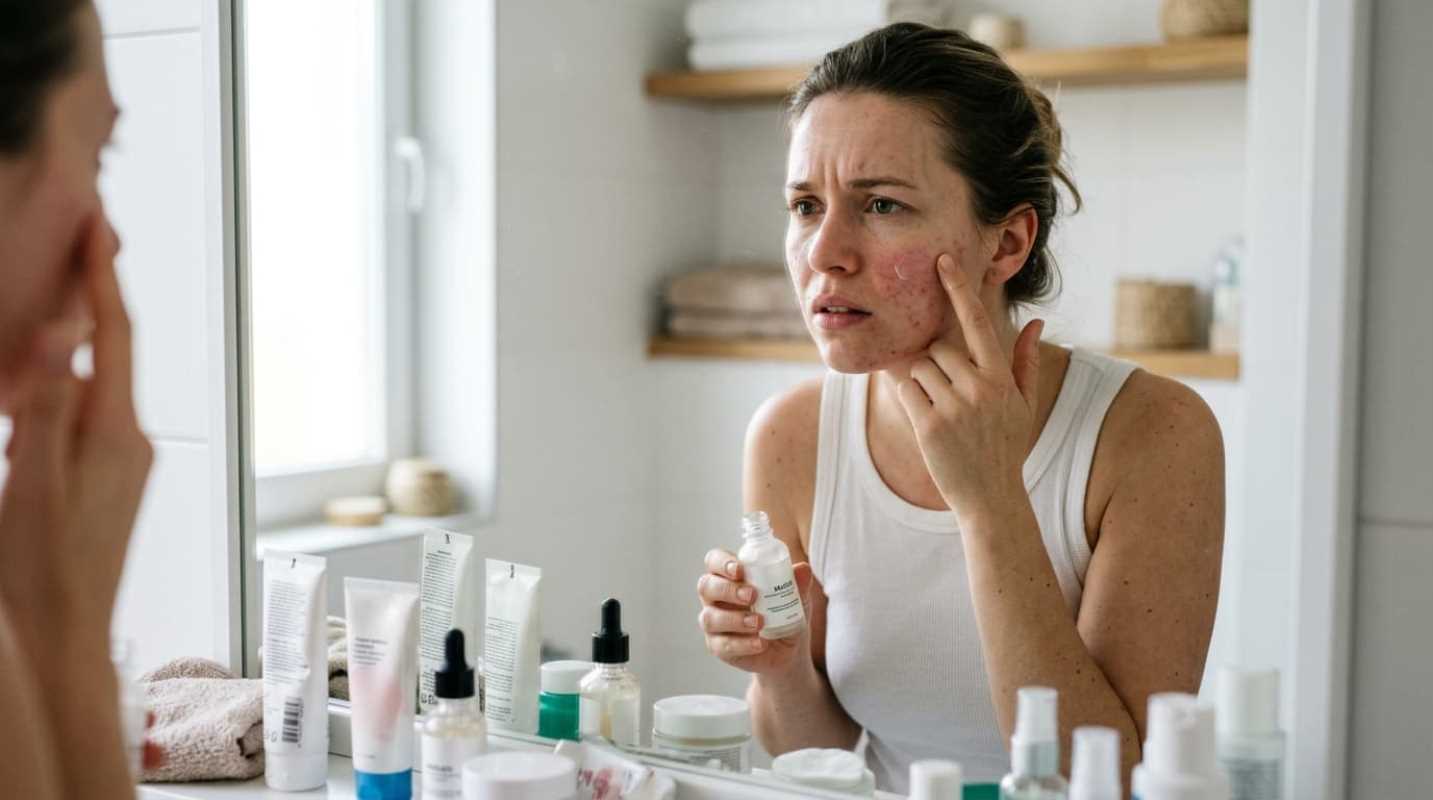
When your ceramide levels drop because of aging, cold weather, or overusing harsh acids, that mortar crumbles. Moisture escapes, irritants get in, and you end up with dry, red, irritated skin. This is called transepidermal water loss, and it's the root of most common skin issues.
This explains why the global barrier repair market is exploding, projected to grow from $2.41 billion in 2025 to $2.60 billion in 2026.¹ But you can't just throw any ceramide cream on your face and expect a miracle. Your skin is incredibly picky about lipid ratios.
Dermatologists agree that applying isolated ceramides doesn't work well and can even delay your skin's natural recovery. Your skin needs a specific blend of lipids to actually heal. Look for these two proven formulations:
• The 3:1:1 Golden Ratio: This is a precise molecular mix of ceramides, cholesterol, and free fatty acids.² Clinical data show this ratio significantly speeds up barrier recovery within three to six hours of application, especially in aging skin.
• The 2:4:2 Ratio: This patented blend uses 2% ceramides, 4% cholesterol, and 2% fatty acids. It targets mature lipid decline, helping to restore lost elasticity and radiance over an eight-week period.
In fact, a 2026 global panel of 14 dermatology experts agreed that ceramides and cholesterol are absolutely needed before and after cosmetic procedures like microneedling or chemical peels to speed up healing and prevent dark spots.
Peptides as the Signaling Molecules of Youth
Although ceramides protect your skin from the outside, peptides work on the inside. Peptides are short chains of amino acids. Because whole collagen molecules are too large to penetrate your skin when applied topically, we use peptides to send messages to your cells instead.
Think of peptides as cellular sticky notes. They tell your skin cells to get to work and make more collagen and elastin. In the skincare world, they generally fall into four categories:
• Signal Peptides: These trick your skin into thinking collagen has been damaged, prompting your cells to make more of it.
• Carrier Peptides: These deliver trace minerals like copper to your cells to help with wound healing and antioxidant defense.
• Enzyme-Inhibitor Peptides: These slow down the natural breakdown of your existing collagen, helping you keep the collagen you already have.
• Neurotransmitter-Inhibitor Peptides: Often called "Botox in a bottle," these temporarily relax facial muscles to soften expression lines.
But let's keep expectations realistic. A major March 2026 systematic review published in Frontiers in Medicine analyzed 19 clinical trials. The researchers found that while peptides definitely boost skin hydration and brightness, their actual effect on wrinkle reduction is modest. It's a slow, steady process, not an overnight facelift.
This brings us to the dark side of the biohacking movement. Some online communities are self-injecting cosmetic peptides like GHK-Cu, BPC-157, or CJC-1295 at home, hoping for systemic youth. Dermatologists strongly warn against this. There are zero human clinical trials proving that injecting cosmetic GHK-Cu is safe or effective, and regulatory bodies are cracking down on these unregulated online sales.
Even topically, too much of a good thing can backfire. Overusing high-concentration copper peptides can lead to a reaction known as the "copper uglies." Excess copper overactivates the enzymes that break down damaged tissue, meaning it actually starts degrading your healthy collagen, leaving your skin looking deflated and sensitized.
The Showdown: Why You Don't Have to Choose
So which one wins the battle? The short answer is: neither, because they work best together. They aren't competitors. They're complementary technologies.
Ceramides keep the peace on the surface, while peptides build structure underneath. If you only use peptides but have a damaged barrier, those expensive signaling molecules will just leak out, and your skin will remain irritated. If you only use ceramides, you protect your skin but miss out on active collagen-building signals.
Integrating both into your routine is actually very simple. Here is a dermatologist-approved framework to get the best results.
1. Stabilize Your Barrier First: If your skin is currently stinging, red, or flaking, pause your active peptides. Stick to a ceramide-dominant cream with a 3:1:1 ratio for three to six weeks until your skin feels calm and hydrated.
2. Layer for Longevity: Once your barrier is healthy, introduce your peptides. Apply a water-based peptide serum to clean skin first so the small molecules can sink in.
3. Lock It In: Immediately follow up with your lipid-rich ceramide moisturizer. This seals the peptides inside and prevents moisture from escaping.
Building a Sustainable Skincare Approach
The world of skincare will always have a new, flashy trend or a biohacking shortcut that promises the world. But healthy skin is built on consistency and biology, not hype.
You don't need to take risky shortcuts or buy into unproven injectable trends to get radiant, youthful skin. By focusing on a strong, ceramide-protected barrier and supporting it with well-formulated topical peptides, you are giving your skin exactly what it needs to thrive.
As Dr. Mona Gohara, Associate Clinical Professor of Dermatology at Yale School of Medicine, explains, ceramides and peptides work best as a team.³ Ceramides seal the cracks in your skin's barrier, while peptides act as the messengers telling your cells to produce the collagen that keeps skin firm. You need both for a complete approach.
Keep your routine simple, trust the clinical data, and let your skin heal at its own pace. Your barrier will thank you.
Sources:
1. Global Barrier Repair Skincare Market Report
https://www.intelmarketresearch.com/barrier-repair-skincare-market-43920
2. The 3:1:1 Ratio and Ceramides in Skin Barrier Theory
https://skinbarriertheory.com/2026/04/10/311-ratio-and-ceramides/
3. Today: Peptides vs. Ceramides
https://www.today.com/shop/peptides-vs-ceramides-rcna225706
*This article on factblast.net is for informational and educational purposes only. Readers are encouraged to consult qualified professionals and verify details with official sources before making decisions. This content does not constitute professional advice.*