Have you ever stared at a shelf filled with fifteen different serum bottles and wondered how taking care of your face got so complicated? You are definitely not alone. A few years ago, social media pushed the idea that healthy skin required a complex ten-step daily ritual. Double cleansing, toners, essences, ampoules, eye creams, sheet masks, lock-it-in oils - it felt like taking on a demanding second job.
Here is the truth. Your skin does not actually want a complex chemical cocktail every single night. In fact, stripping things down to a minimalist routine is one of the smartest choices you can make for your skin barrier.
When you focus on just a few well-chosen steps, staying consistent becomes easy. You won't abandon your routine after a long, exhausting workday because the whole process takes under two minutes. Over time, that steady daily care is what delivers real results.
The Foundation: Cleansing and Protecting
If you want healthy-looking skin, you only need to master two main jobs: clearing away daily buildup and shielding your skin from harm.
Let's talk about cleansing first. Your main goal here isn't to wash your face until it feels squeaky clean. That tight, squeaky feeling is actually a warning sign that you stripped away natural oils and damaged your protective barrier. You want a mild, alcohol-free cleanser that lifts away dirt, excess oil, and sweat while leaving skin feeling soft. The American Academy of Dermatology highlights that gentle, non-abrasive care is far better for long-term health than harsh scrubbing.¹
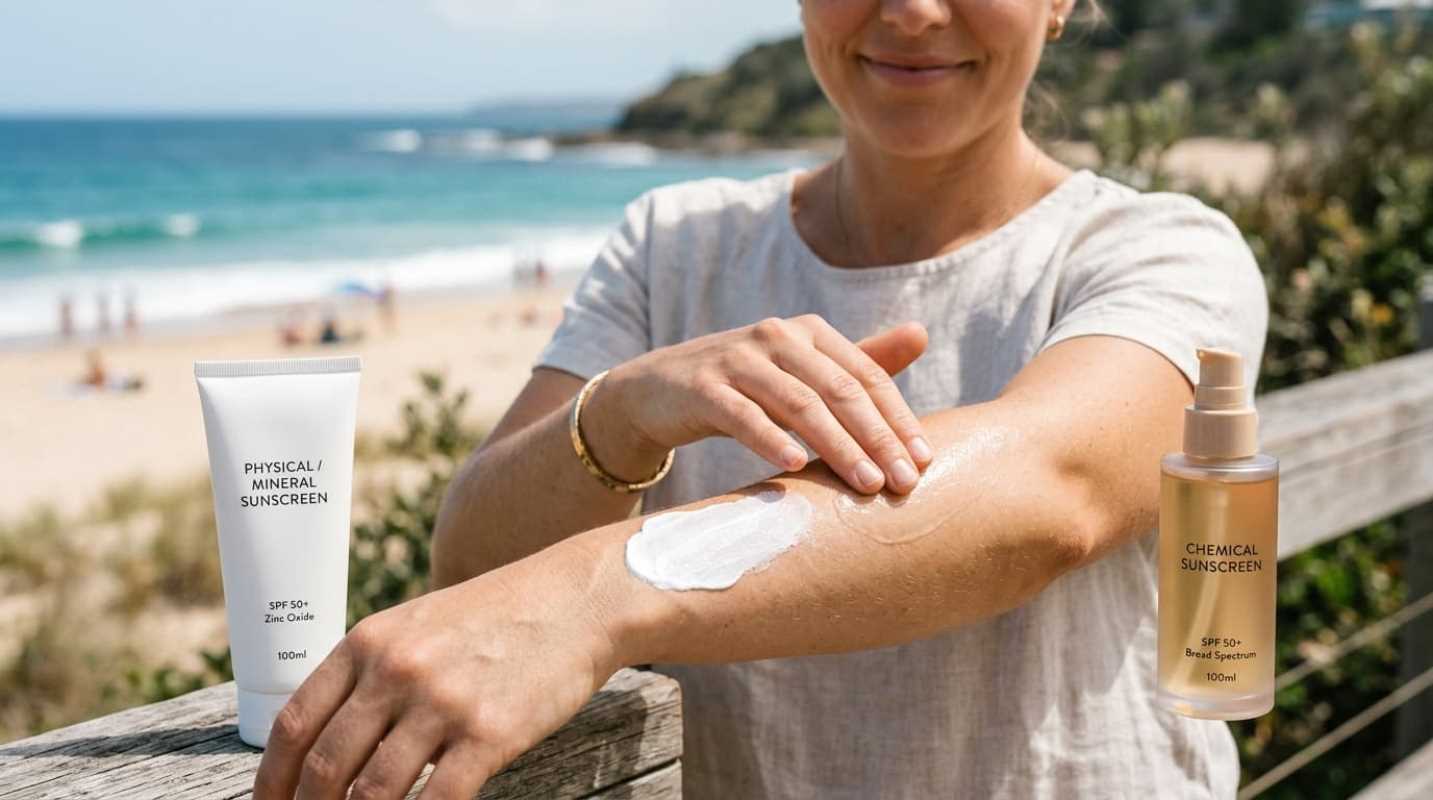
Next comes sun protection. If you only use one skincare product for the rest of your life, make it sunscreen. Daily broad-spectrum SPF 30 or higher is non-negotiable, even on cloudy days. UV damage causes up to 90% of premature aging signs, so daily sunscreen handles the heavy lifting of preventative care.
Here is how your core daily foundation comes together
• Morning Cleanse: Wash with a gentle cleanser, or simply rinse with lukewarm water if your skin tends to be dry.
• Morning Sun Protection: Apply your broad-spectrum SPF 30+ generously over your face and neck. To save time, pick a dual-purpose moisturizer with built-in sunscreen.
• Evening Cleanse: Wash thoroughly with your cleanser to remove daytime pollution, sunscreen, sweat, and makeup.
• Evening Moisture: Apply your moisturizer to help your skin repair itself overnight.
Hydration: The Secret to a Healthy Glow
Hydration gives your skin that plump, clear look, but getting it right means understanding your specific skin type.
Picking the right moisturizer depends on how your skin behaves throughout the day
• Oily Skin: Look for lightweight, oil-free gel formulas that absorb quickly without clogging pores.
• Dry Skin: Choose richer creams packed with ingredients like ceramides or glycerin to restore missing moisture.
• Combination Skin: A fluid lotion usually works best, providing balance without making your T-zone feel greasy.
• Sensitive Skin: Stick to simple, fragrance-free formulas with short ingredient lists to lower the chance of irritation.
Want a simple trick to get double the hydration from your current moisturizer? Apply it while your skin is still slightly damp after washing. Lightly pat your face with a clean towel, then put your cream on immediately. This simple habit locks in surface water so your moisturizer works far better.
Targeted Add-ons When to Level Up
Once your basic routine feels completely automatic, you might want to address specific concerns like dark spots or fine lines. But watch out for the trap of thinking more products bring faster results.
Throwing multiple strong active ingredients at your face at the same time is a recipe for trouble. A study published in Clinical, Cosmetic and Investigational Dermatology found that over 91% of dermatologists expressed concern regarding complex multi-step routines, with nearly 88% regularly treating patients for skin issues caused by active ingredient overload.²
If you decide to add active treatments like Vitamin C or Retinol, follow these ground rules
• Focus on One Concern: Identify your biggest priority first, whether that is brightening tone or smoothing texture.
• Introduce Actives Slowly: Use strong ingredients just once or twice a week at first to let your skin adjust.
• Always Patch Test: Apply a small blob of new product to your inner arm or side of your neck for 24 to 48 hours to check for redness before using it on your face.
Consistency: The Ultimate Game Changer
Here is a reality check that beauty marketing rarely talks about. An affordable, basic routine you use every single morning and night will completely outperform an expensive luxury treatment you only do once in a while. Industry experts note that consistent daily home care accounts for roughly 80% of your overall skin health maintenance, while professional treatments only make up the remaining 20%.³
Skin cells take roughly four weeks to turn over. That means you need to give any simple routine at least a full month of steady use before deciding if it is working.
Be ready to adjust your routine as seasons change too. You might need a heavier cream during dry winter weather, then switch back to a lighter lotion during humid summer months. Pay attention to how your face feels when you wake up, and let that guide small tweaks.
Building great skin isn't about collecting dozens of viral products. It's about finding three basic steps that fit your life, sticking with them daily, and giving your skin barrier the space to thrive.
Sources:
1. American Academy of Dermatology
https://www.aad.org/public/everyday-care/skin-care-basics/care/skin-care-budget
2. Clinical, Cosmetic and Investigational Dermatology
https://www.dovepress.com/dermatologists-perspectives-on-skincare-routine-trends-peer-reviewed-fulltext-article-CCID
3. American Academy of Physician Associates
https://www.aapa.org/news-central/2018/11/10-tips-skincare-secrets-dermatology-pas/
*This article on factblast.net is for informational and educational purposes only. Readers are encouraged to consult qualified professionals and verify details with official sources before making decisions. This content does not constitute professional advice.*