Have you ever bought a foundation that looked like a flawless match under bright store lighting, only to step outside into natural daylight and realize your face looks completely disconnected from your neck? You are definitely not alone. Millions of beauty lovers keep a drawer full of mismatched bottles left over from quick guesses and impulse buys. Finding the right foundation does not have to be a trial by fire. It comes down to two simple pieces of the puzzle: getting the exact shade match for your sub-surface skin tone and selecting a formula that works with your skin's natural chemistry.
Once you align those two factors, your makeup shifts from looking like a heavy layer to looking like healthy, radiant skin.
Mastering the Art of Undertone Matching
To pick the right shade, you need to understand the difference between surface tone and undertone. Your surface tone is the overall shade of skin you see at first glance. This surface color shifts frequently with sun exposure, skin conditions, seasonal tanning, or redness. Your undertone is the subtle, natural hue sitting just beneath your skin's surface, and it stays constant year-round.
If you ignore your undertone, you end up with that dreaded ghostly gray hue or an overly bright orange tint. Here is how undertones break down.
• Cool (C): Pink, rosy, or subtle bluish hints underneath the skin. If your veins look blue or purple under natural daylight, silver jewelry flatters you most, and you burn easily in the sun, you have a cool undertone.
• Warm (W): Golden, yellow, or peachy tones. If your veins look greenish, gold jewelry looks best on your skin, and you tan easily without burning, you belong in the warm family.
• Neutral (N): A balanced mix of warm and cool shades. Your veins might appear blue-green, both gold and silver jewelry look great on you, and your skin tans moderately.
• Olive: Muted greenish, grayish, or soft yellow tones. Olive skin can range from fair to deep, but traditional warm foundations often look way too orange, while cool or neutral foundations leave skin looking washed out and ashy.¹
You can test your undertone at home with a couple of simple tricks. The easiest option is the white cloth test. Hold a stark white towel or shirt next to your bare, freshly cleansed face in natural daylight. If your skin looks golden or yellow by comparison, you are warm. If you look slightly pinkish, you are cool. If you look a bit grayish or greenish, you likely have olive undertones.
Decoding Formula Suitability by Skin Type
Shade matching is only half the battle. A foundation can match your color perfectly, but if the formula fights against your skin type, it will end up caking, separating, or sliding off your face by lunch.
The modern beauty world treats complexion products as direct extensions of daily skincare routines. Formulations now pack rich hydrating actives like hyaluronic acid, niacinamide, and ceramides directly into liquid formulas. Industry data shows that skincare-infused foundations drive billions in global market sales as shoppers prioritize skin health alongside cosmetic coverage.²
Here is how to pick the right texture and ingredient profile for your specific skin type.
• Oily Skin: Reach for oil-free liquids, soft mattes, or liquid-to-powder formulas. Look for ingredients like niacinamide or silica, which actively absorb excess oil and prevent your makeup from melting away throughout the day.
• Dry Skin: Choose liquid, serum, or gel-cream foundations that offer a luminous or dewy finish. Key ingredients like hyaluronic acid, glycerin, and squalane hold moisture on the skin surface so the product won't cling to dry patches.
• Combination Skin: A medium buildable foundation with a satin or natural finish works best. Try a double-priming approach by using a mattifying primer on your shiny T-zone and a hydration primer on drier cheeks.
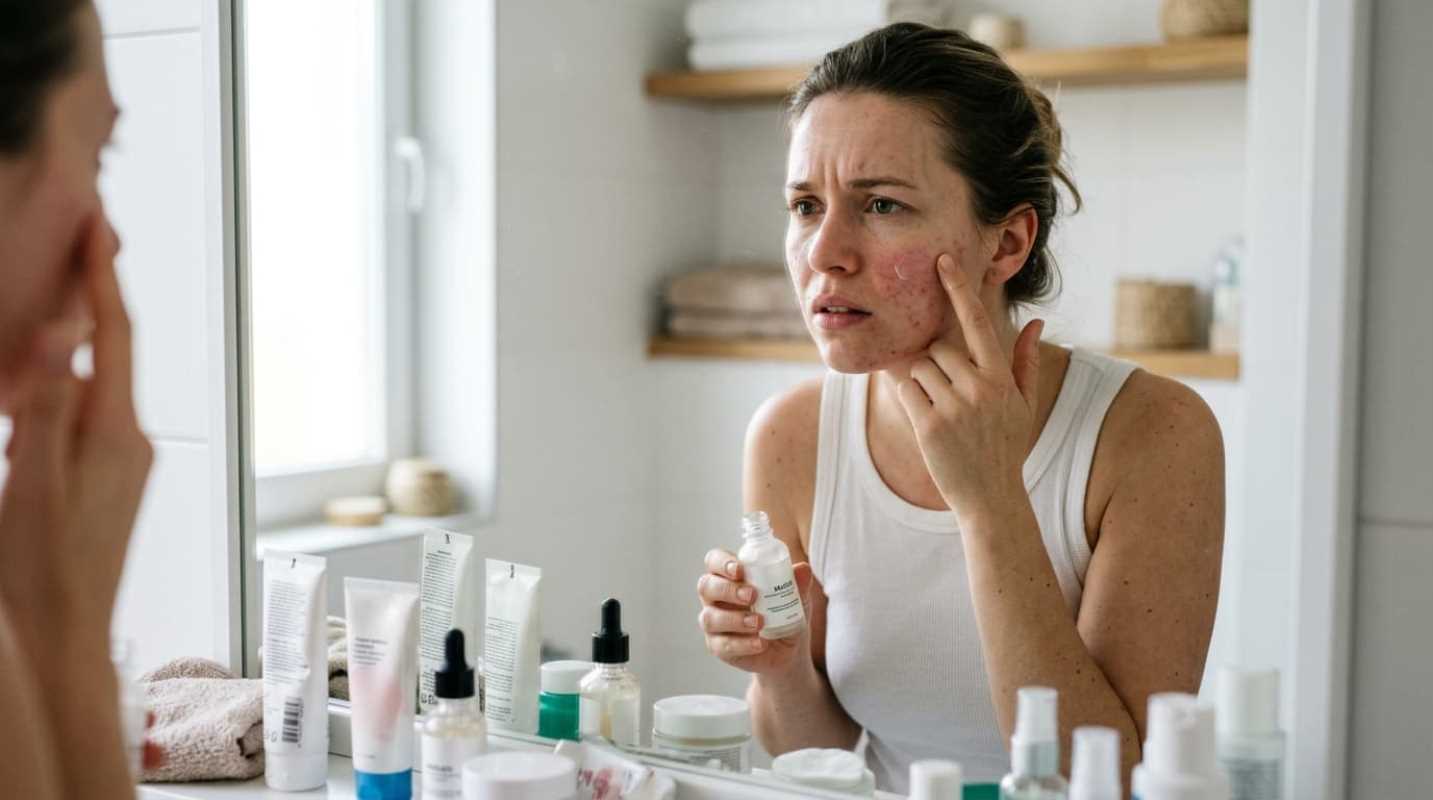
• Sensitive or Acne-Prone Skin: Choose fragrance-free, non-comedogenic liquid or mineral powder formulas. Look for soothing ingredients like centella asiatica or zinc oxide to calm redness without clogging pores.
• Mature Skin: Lightweight serum foundations and tinted hydrators with light-reflecting pigments bounce light off fine lines. Heavy matte powders tend to sit in lines and exaggerate skin texture, so stick to fluid liquids.
Coverage Level Comparison and What You Need
Once you know your shade and formula type, you need to decide how much coverage you actually need on a daily basis. Many people default to heavy full-coverage formulas out of habit, but modern makeup favors a fresh skin-like finish.
• Sheer and Skin Tints: These offer the lightest touch, evening out minor flushness and mild discoloration while allowing your natural freckles and skin texture to show through. They are ideal for casual wear and warm weather.
• Medium and Buildable: This is the sweet spot for most skin types. Medium formulas unify your complexion while still looking remarkably natural. You can apply a thin single layer across your whole face, then dab a tiny bit extra over dark spots or areas of redness.
• Full Coverage: Ideal for professional photography, special events, or masking pronounced hyperpigmentation. Full coverage leaves a smooth canvas, but it requires careful blending around the hair and jawline to keep things seamless.
A good approach is to embrace a light-handed application approach. Rather than applying a thick mask of full-coverage foundation everywhere, use a light or medium base across your entire face, then let a targeted concealer handle specific blemishes or dark circles under your eyes.
The Pro-Level Testing Approach
When you are ready to test products in person or online, avoid the common mistakes that throw off your shade match.
First, never test a new foundation shade on the back of your hand or inner wrist. Your hands are exposed to sun and water far differently than your face, meaning the skin color there rarely matches your neck and chest.
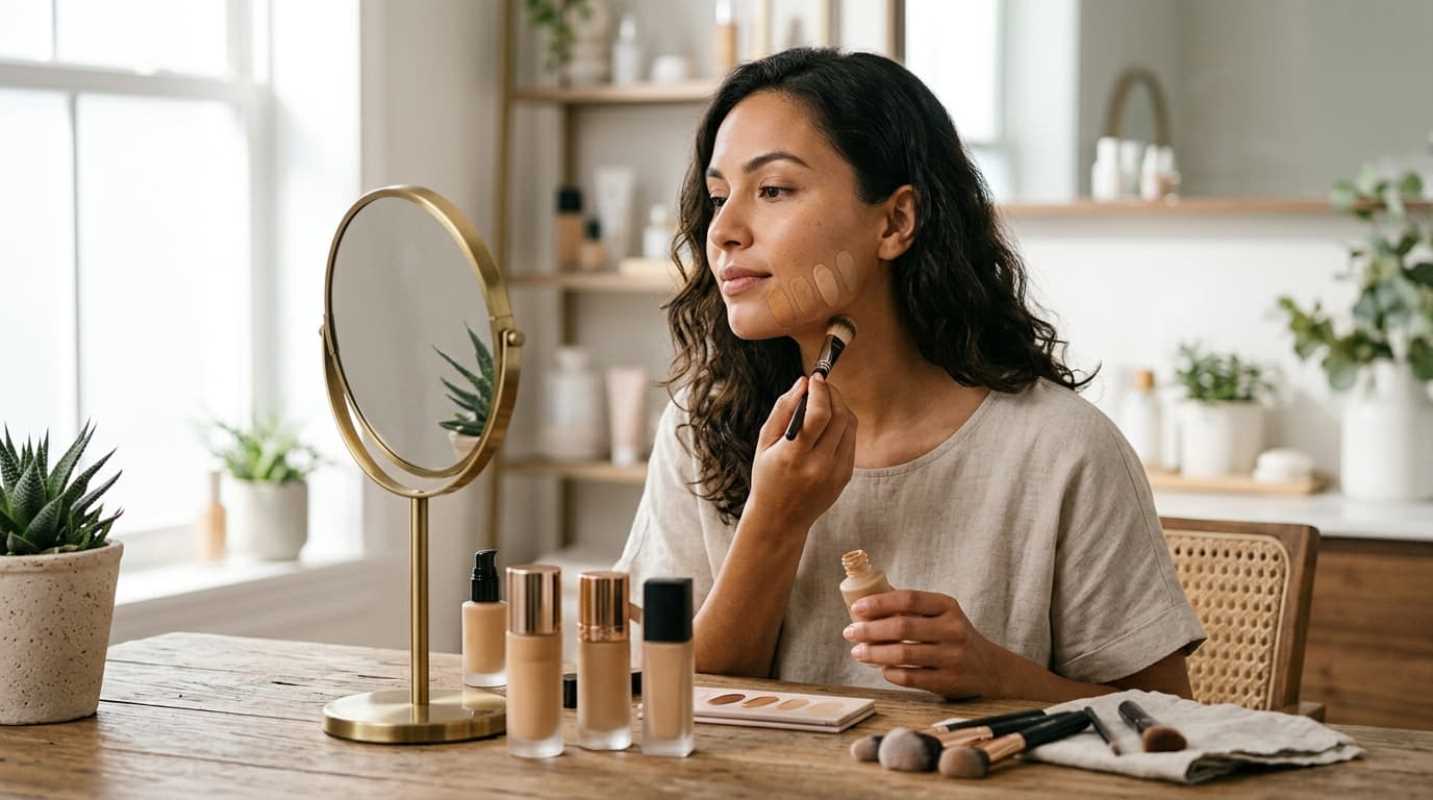
Instead, use the jawline-to-chest swatch method:
1. Choose three shades that look close to your skin tone in the bottle.
2. Swipe them side-by-side in vertical lines running from your lower cheek, down across your jawline, and onto your upper neck.
3. Step into natural light near a large window or outdoors. The right shade will seamlessly disappear into both your face and your neck.
Do not make a buying decision immediately after swatching. Give the product 10 to 15 minutes to dry down completely. Many foundation pigments undergo oxidation, which is a natural chemical reaction between atmospheric oxygen, formula oils, and your skin's natural pH level. This reaction can cause the shade to darken by half a tone or shift warmer after drying.
If you prefer shopping online, modern tech tools have made shade selection far easier. AI-powered algorithms and computer-vision matching tools analyze facial color points to match your skin against thousands of cosmetic database shades before you place an order.³
Your Foundation, Your Rules
Finding your ideal foundation takes a bit of deliberate testing, but skipping the guesswork saves you time, money, and makeup frustration down the road. Focus on matching your hidden undertone, pairing the texture to your skin type, and testing candidates in clear daylight before committing to a full bottle.
Your foundation should celebrate your skin rather than hide it away. Embrace your natural skin texture, refine your matching routine, and step out with complete beauty confidence every day.
Sources:
1. Foundation Undertone Guide
https://color-analysis.app/blog/foundation-undertone-guide
2. Cosmetics Foundation Market
https://www.globalmarketstatistics.com/market-reports/cosmetics-foundation-market-14711
3. What are the Best Foundation Shade-Matching Technologies
https://cosmeticsbusiness.com/what-are-the-best-foundation-shade-matching-technologies