Have you ever noticed your favorite moisturizer suddenly feels heavy and greasy around May? Or maybe that lightweight lotion you loved all summer leaves your face feeling tight, itchy, and patchy by November? You are not imagining things. About 80% of us know our skin needs change throughout the year, yet most people keep using the exact same cleanser and cream through every single month. We swap our heavy winter coats for linen shirts when weather shifts, so why leave our skincare hanging out to dry?
Adapting your regimen as the weather shifts is not a passing beauty trend or a gimmick to buy extra bottles. It is a biological requirement.
Why Your Skin Needs a Seasonal Refresh
Your skin is your primary defense against the outside world, and environmental factors like temperature, humidity, and atmospheric pollution drive up to 70% of external skin changes.¹ When the air around you alters, your skin barrier has to adapt quickly.
A clinical study published in the International Journal of Cosmetic Science followed hundreds of women across different weather conditions. Researchers found that skin hydration plummets during cold months, while natural oil production and transepidermal water loss peak during warmer transition periods.
Cold air holds very little moisture. When you mix freezing outdoor winds with blast-furnace indoor heating, your skin loses water rapidly. On the flip side, summer heat ramps up your sweat and oil glands, creating a breeding ground for clogged pores and surface congestion.
Switching up your products keeps your skin barrier balanced. It gives your skin the specific support it needs before severe irritation or breakouts take hold. You do not need to throw away your whole shelf every three months, but you do need to manage your heavy hitters.
Mastering Hydration Adjustment Approaches
When temperatures shift, hydration is usually the first thing that goes off track. The secret to keeping your glow without breaking out lies in understanding how different hydrating ingredients interact with your environment.
• Humectants: These are water-magnet molecules like hyaluronic acid, glycerin, and aloe vera. They draw moisture out of the air and pull it into your outer skin layer. They work wonders in humid climates, but in dry winter air, they can actually pull moisture out of deeper skin layers if you do not seal them in.
• Emollients and Occlusives: These are lipid-rich ingredients like ceramides, squalane, shea butter, and plant oils. They act like a protective jacket, smoothing dry flakes and creating a physical barrier that stops water from evaporating into thin air.
Moisturizer "Weight" in Different Seasons
In spring and summer, lean heavily on water-based gels and light lotions packed with humectants. Your skin already produces more natural lipids in warm weather, so you do not need thick occlusives.
When fall arrives and humidity drops, start layering. Swap that light gel for a lotion that blends humectants with lipid-replenishing ceramides. By dead winter, bring out rich, emollient creams to block out harsh winds and dry indoor heat.
Addressing Seasonal Skin Concern Shifts
Each season brings its own set of skin challenges. Summer means fighting excess shine, heat rash, and UV damage. Winter brings flaky patches, heightened sensitivity, and dullness.
To keep your face happy, adjust your high-powered active ingredients based on sun exposure and climate conditions.
Take retinoids and chemical exfoliants like glycolic acid. Dermatologist Dr. Shilpi Khetarpal points out that increased sun exposure during summer makes retinoids tricky, as they thin the top layer of skin and boost sun sensitivity. Instead, summer is the time to prioritize lightweight antioxidant serums like Vitamin C under your sunscreen to neutralize free radicals.
When fall rolls around, it becomes prime repair season. As sun exposure drops, dermatologists recommend bringing back stronger retinoids, AHA exfoliants, and targeted brightening agents to clear away summer dark spots and dead surface cell build-up.
Keep your base routine steady through it all. Your gentle cleanser, daily moisturizer, and sunscreen form your core framework. Adjust the intensity of your active treatments around them as the calendar turns.
Step-by-Step Product Swaps
Transitioning your shelf does not have to feel overwhelming. Focus on adjusting these key categories as the climate shifts around you.
• Cleansers: In cold weather, swap out stripping or foaming cleansers for oil or non-foaming options that leave your natural lipid barrier intact. In warm weather, switch to a gentle gel or light foaming cleanser to wash away extra sweat, sunscreen, and excess sebum.
• Targeted Serums: Focus on Vitamin C and niacinamide in the spring and summer to defend against UV damage and keep oil production balanced. In the fall and winter, shift toward soothing peptides, hyaluronic acid, and barrier repair serums.
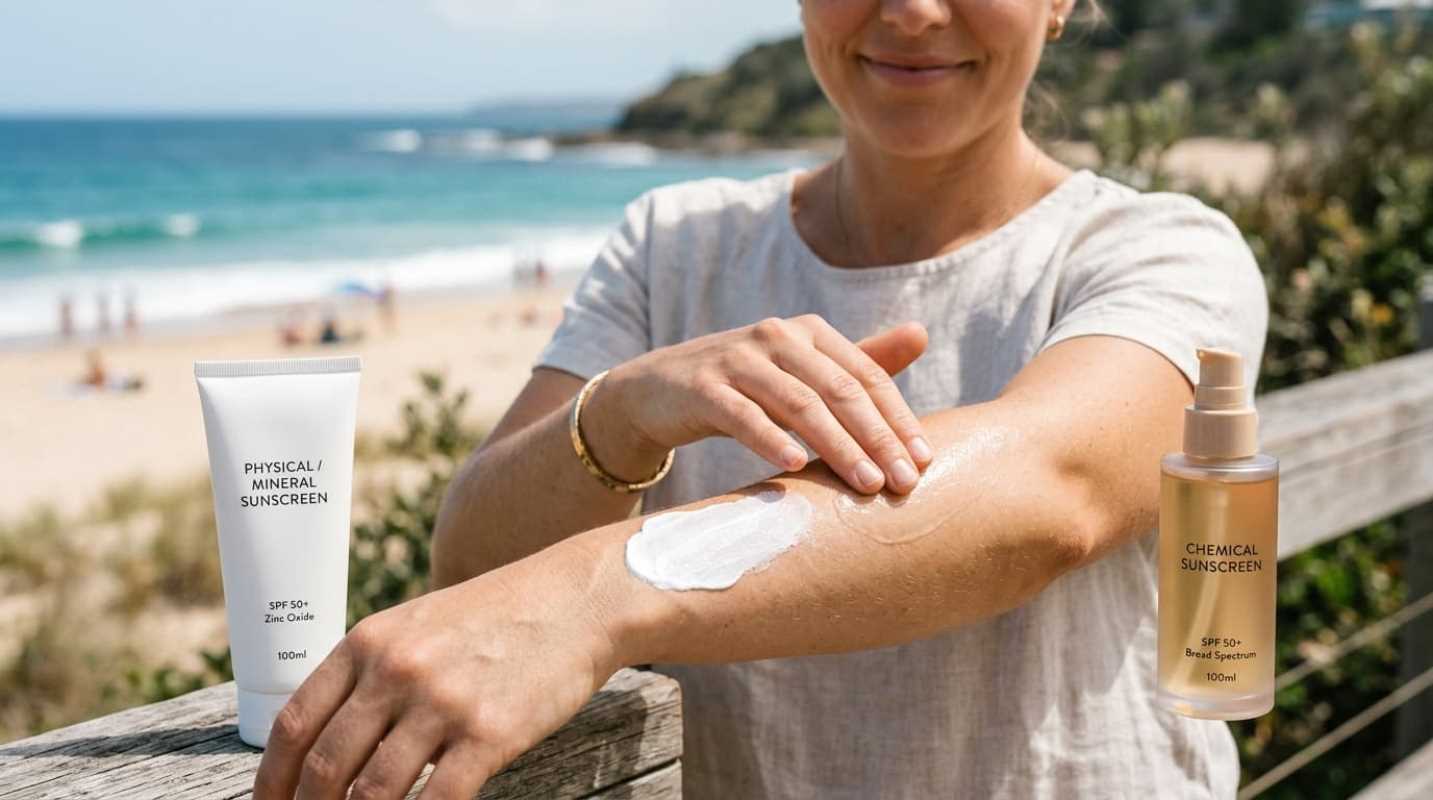
• Sunscreen: Sunscreen is an everyday mandate regardless of the weather. Facial SPF sales have climbed as more people recognize that UV rays cause damage 365 days a year, rain or shine.² What should change is the texture. Use ultra-light fluids or mineral gels in summer, and move to hydrating, cream-based SPFs in winter.
Listening to Your Skin as Your Metric
The weather forecast is a helpful guide, but your skin is the ultimate metric. Whenever the season turns, give yourself a quick skin audit over a three-day period.
Pay attention to how your face feels two hours after applying your morning products. Does it feel tight, red, or itchy? You need more lipids and emollients. Is it slick with shine or showing new tiny bumps? Scale back to lighter, water-based textures.
Be extra careful during transition periods like early spring and late fall. Atmospheric instability can cause temporary skin sensitivity, and your skin barrier can take anywhere from two weeks to two months to fully adapt to a new climate.
Resist the urge to scrub away transitional flakiness with harsh physical scrubs or strong chemical exfoliants. Over-exfoliating a stressed barrier only makes redness and dehydration worse.
Skincare works best when you view it as a flexible system rather than a fixed set of rules. Listen to what your skin asks for each morning, swap your products intentionally, and let your routine evolve alongside the changing weather.
Sources:
1. The Science-Backed Guide to Seasonal Skincare
https://helloevy.com/blogs/news/the-science-backed-guide-to-seasonal-skincare-why-your-routine-needs-to-change-with-the-weather
2. Come Rain or Shine, SPF Sells
https://beautymatter.com/articles/come-rain-or-shine-spf-sells
*This article on FactBlast is for informational and educational purposes only. Readers are encouraged to consult qualified professionals and verify details with official sources before making decisions. This content does not constitute professional advice.*